What will the next five years look like?
Project plan
Background
In July 2021, WHO and partners embarked on a journey of imagining the future of infectious threats. Given ever increasing urbanization, human mobility and population density, we know that there will be another pandemic. The question is not if but when. Almost two years after the identification of a novel coronavirus that sparked the COVID-19 pandemic, hindsight allows us to look back and reflect on our actions and their outcomes over the course of the pandemic so far. However, to find our way to a healthier future, we must move beyond reflection.
Indeed, we tend to solve problems we have already faced during previous pandemics. In doing so, we hope that we will be better prepared for the next one. While there is value to learning lessons from the past, unfortunately, the next pandemic may be very different. We could be caught by surprise if we don’t imagine the various plausible scenarios ahead of us.
Foresight is a newer approach, and this is the first time WHO has applied it to pandemic and epidemic preparedness. The foresight approach uses a structured and interactive process. It creates a space for us to ask, “what are the possibilities and how do we chart a different course?” Foresight is not a forecast. It is not a prediction or projection based on mathematical modeling. It is an intellectual exercise accompanied by empathy in imagining the future, and helps us define the players and actions towards the future we want to live in. Based on well-established methodology, the foresight approach consists of analyzing the megatrends that influence the present. Based on the combination and varying intensity of these trends, we then develop plausible scenarios for the future.
This Foresight Initiative brought together world leaders and influencers from a variety of disciplines to consider the global trends impacting the emergence and course of the COVID-19 pandemic, discuss its future, as well as the future of other infectious threats in the next three to five years. In doing so, the initiative aimed to shape a collective appraisal of the risk ahead and jointly think of solutions that either prevent the worst-case scenario or realize the best-case scenario. To use the outcomes of this exercise immediately to actions, we set the time horizon relatively short: 3–5 years.
Objectives
The aims of this initiative are to (i) facilitate a global debate around plausible scenarios; (ii) identify threats, opportunities, choices, and innovative solutions to strengthen epidemic and pandemic preparedness; and (iii) shift from a reactive to a proactive approach to address infectious threats.
Outcomes
Four plausible scenarios were developed. They illustrate the different directions that current and future pandemics and epidemics might take in the next 3–5 years.
Learn more about the scenarios:
Through a series of conversations with stakeholders, three pillars were established as the overarching, guiding principles for the overall effort of strengthening future pandemic preparedness: (1) Trust (2) Solidarity and Equity and (3) Sustainable Development. The report identifies five themes as areas of focus. Each area of focus includes clear practical ways forward that are key in formulating an all-encompassing approach when managing and responding to the complexity of infectious threats.
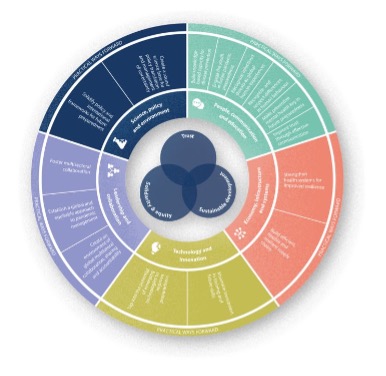
Find out more about the five themes and areas of focus – here
Methodology
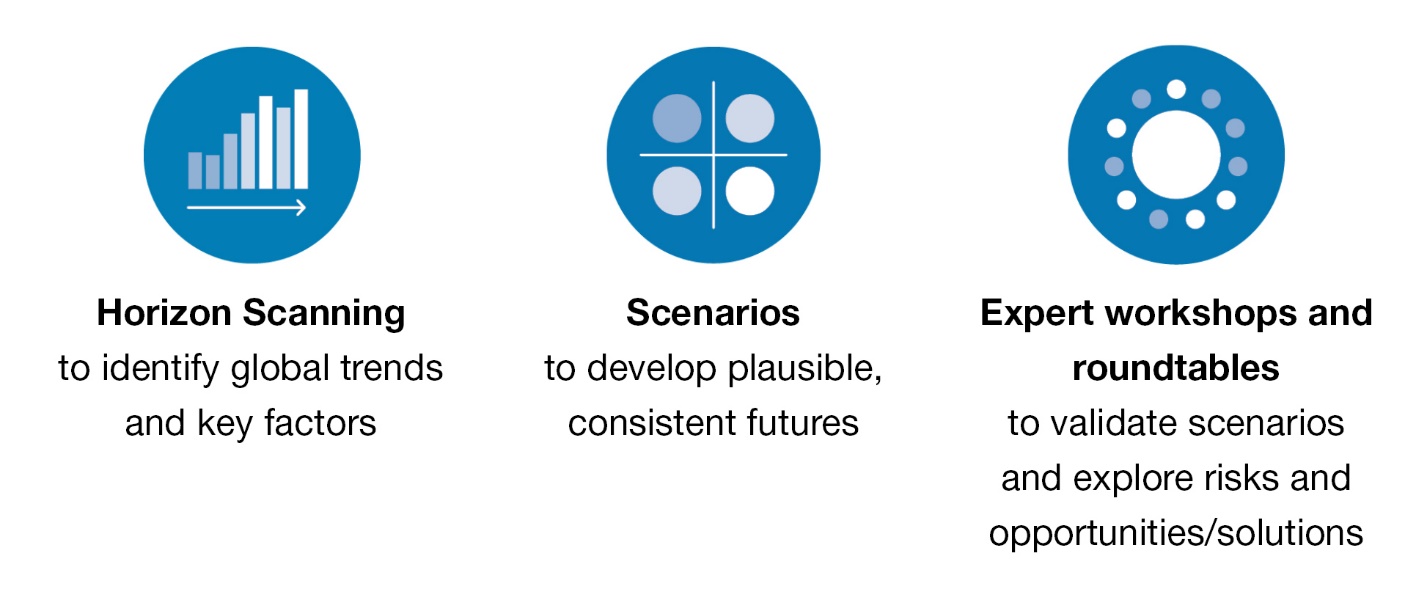
To find out more, read the report (hyperlink).
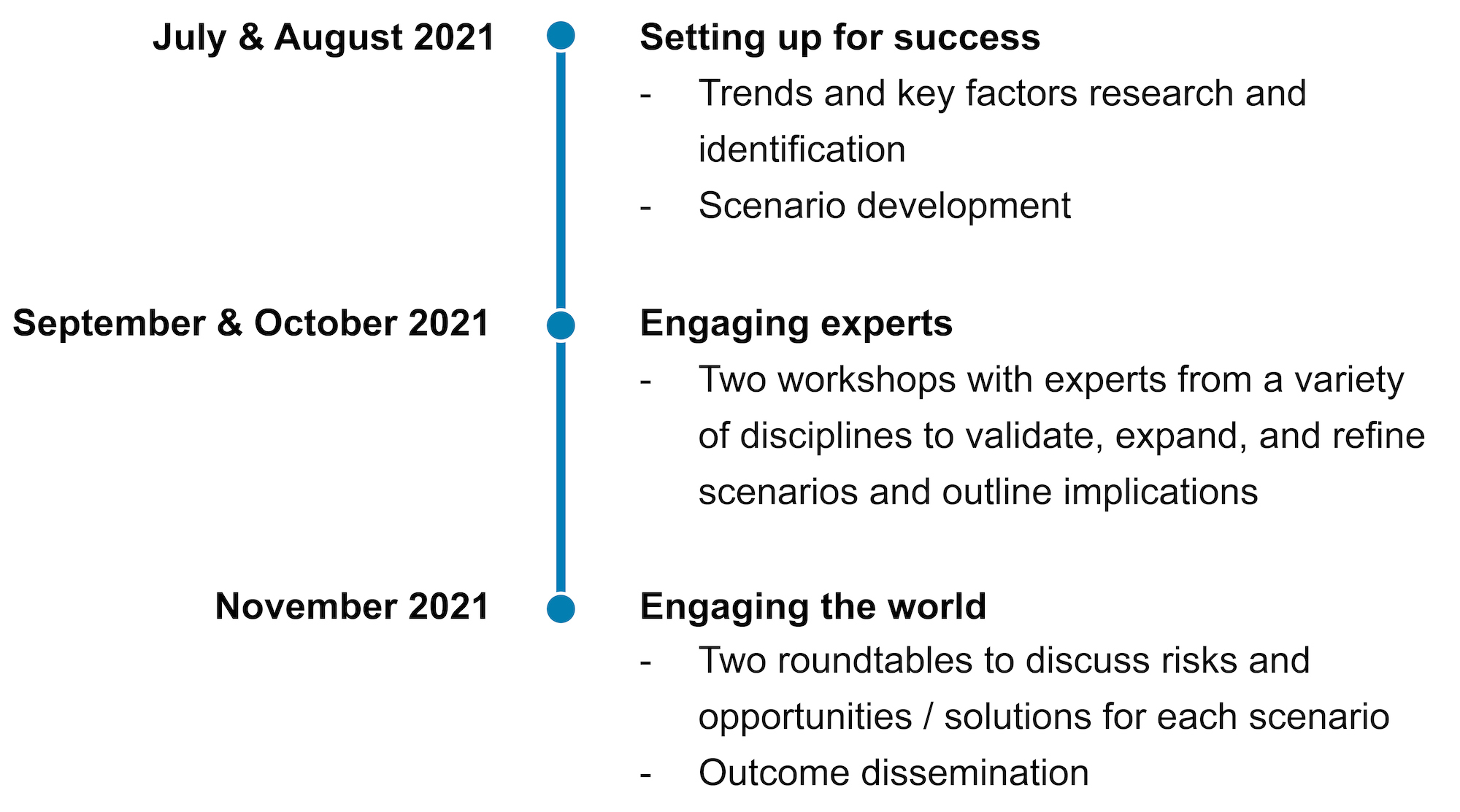
Timeline